
It still feels like summer. Your lawn is still fighting heat, turf disease, and months of wear and tear, and you’re probably seeing the results: thin spots, bare patches, or turf that just isn’t as dense as it was in May. The good news is that the fix is available right now.
It seems intuitive to seed in the spring, when everything else is greening up. But after decades of seeding lawns across New Jersey and eastern Pennsylvania, we can tell you that fall wins almost every time. Seeding now gives new grass the best possible conditions to germinate, root in, and carry a thicker lawn into next season. Here’s why and why you need to be planning today, not in October.
When to Seed Your Lawn This Fall
“Fall” is a broad word, and for seeding it’s misleading. By the time the weather actually feels like fall, the best part of the window has already closed.
For cool-season grasses in our area, the sweet spot is late August through the end of September, with the first week or two of October as the outside edge. The earlier you land inside that range, the more time your seedlings have to establish before the first hard frost.
As discussed later, spring seeding may work, but oftentimes the summer heat stress is too much for the immature plants and you’re left with a field of crabgrass and weeds by the end of August.
Why Timing Matters So Much
Nearly every residential lawn around here is built on cool-season grasses — turf-type tall fescue, Kentucky bluegrass, fine fescues, and perennial ryegrass. These species are built for the weather conditions that early fall delivers.
Ideal Soil Temperatures
In late summer and early fall, air temperatures start to drop while the soil stays warm from the summer. That combination of warm soil and cooling air is the single best environment for fast germination and strong root development. Cool-season seed germinates best when soil temperatures sit in the 50s and 60s. Once soil cools below about 50°F, germination slows dramatically and then stops, which is exactly why waiting until late fall backfires.
Mild Air Temperatures
Cooler days mean seedlings aren’t fighting heat stress the moment they emerge. Instead of burning energy just surviving, they can put it into building roots. Deep, healthy roots help determine whether the lawn holds up next summer.
Less Weed Competition
Spring brings a wave of aggressive annual weeds that compete with new grass for water, nutrients, and light. Spring is also when we apply pre-emergent crabgrass control, which prevents any seed from germinating, including your new grass seed. By fall, the annual weed cycle is winding down, and your new grass has a much clearer runway.
Better, Steadier Moisture
Fall rainfall tends to be gentler and more consistent than spring’s heavy storms or summer’s feast-or-famine pattern. Combined with cooler temperatures and lower evaporation, that means soils stay moist, making it ideal for seed germination.
Time to Establish Before Winter
Seeding inside our recommended window gives new grass enough runway to germinate and build a real root system before the ground freezes. Grass that goes into winter with established roots comes back in spring ready to grow. Grass that was seeded too late may not come back at all.
Keys to Fall Seeding Success
Scattering seed across the lawn and hoping for rain is the most common reason seeding fails. These seven steps are what separate a thick stand of new grass from a wasted bag of seed.
1. Prepare the Ground This is the most important step, and the one most often skipped. Seed that never touches soil never grows.
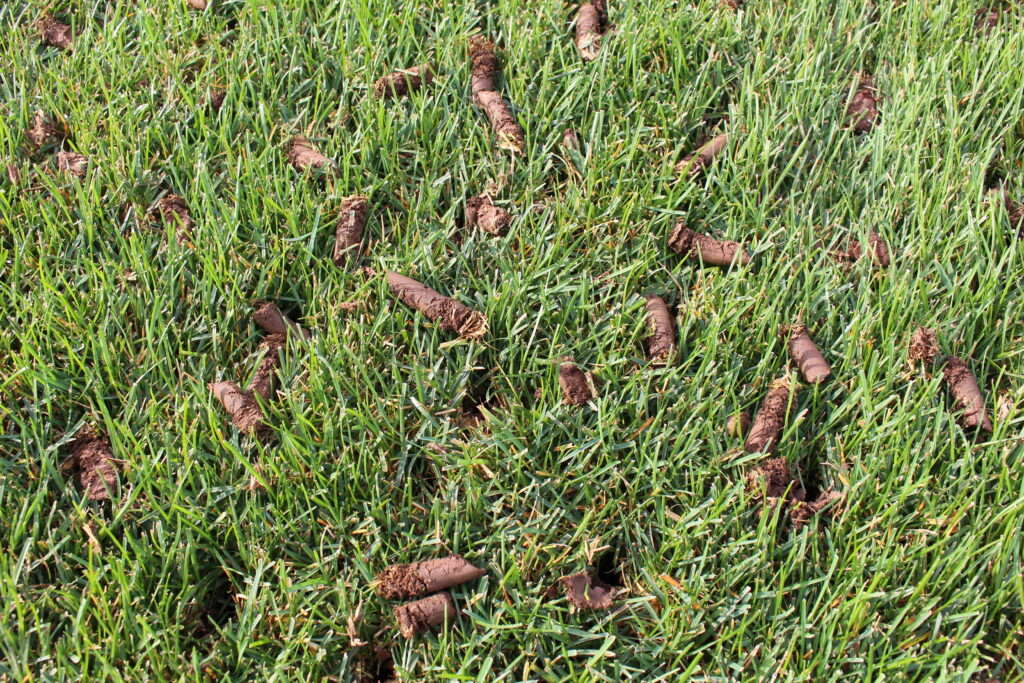
- Dethatch if needed. Excessive thatch acts as a barrier between seed and soil. If your thatch layer is more than about half an inch, remove it first.
- Core Aerate. As we’ve covered before, core aeration pulls plugs that create thousands of perfect little pockets for seed to settle into. It relieves compaction at the same time. This is our strongest recommendation for anyone seeding an existing lawn.
- Loosen the soil. Aeration and dethatching both do this. For smaller bare areas you can also rake the surface or work in fresh topsoil. The goal is always the same: maximum seed-to-soil contact.
- Clear debris. Rake off leaves, sticks, and clippings so seed can reach the ground.
2. Choose the Right Grass Seed 
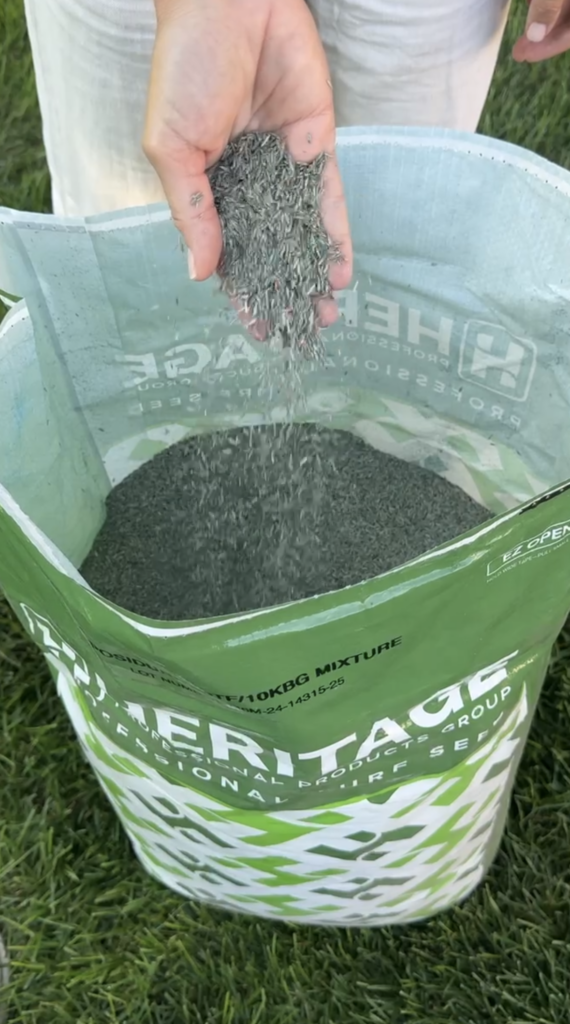
Not all grass seed is equal, and the cheap bags are cheap for a reason. They result in lower germination rates, older seed, and higher weed seed content. Choose a quality blend suited to our cool-season climate and to your specific conditions: full sun versus heavy shade, high-traffic play areas, slopes that dry out fast. For sunny sections, we recommend using a turf type tall fescue and Kentucky bluegrass mixture. This is where our experience pays for itself. If you’re not sure what your lawn needs, give our office a call and we’ll walk you through it.
3. Spread It Evenly 
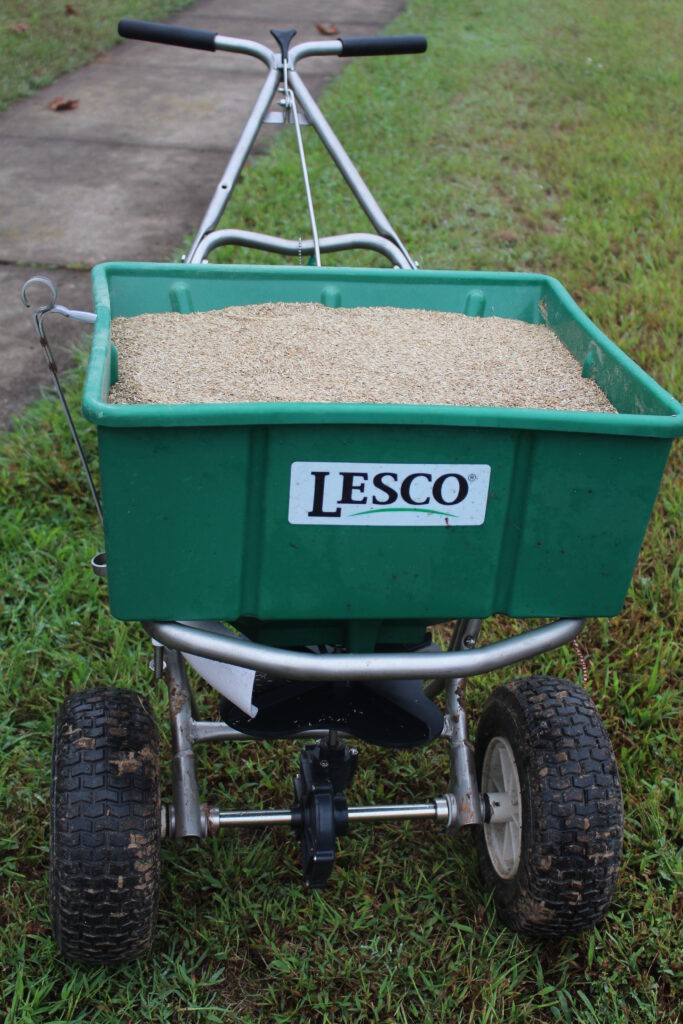
Use a spreader rather than throwing seed by hand. Clumped seed produces patchy, uneven growth with dense tufts in some spots and bare ground in others. Applying half the seed in one direction and the other half perpendicular to it gives the most uniform coverage.



4. Consistent Watering Is Critical
We cannot stress this one enough. It is the step that makes or breaks a seeding job.
New seed must stay consistently moist (damp, not waterlogged) from the day it goes down until the seedlings are established. In practice that usually means light watering for 15 minutes once a day, more often on warm, sunny, or windy days. As the seedlings mature, you gradually reduce frequency and increase depth.
Note that this is the opposite of how you water an established lawn. Normally, daily watering is a mistake that encourages shallow roots and turf disease — see our blog post on the ideal lawn watering schedule for how we recommend watering the rest of the year.
The difference is that new seedlings have almost no root system. They can’t go days without moisture the way mature turf can. Once the new grass is established and temperatures cool, transition back to deep, infrequent watering.
5. Go Easy on Traffic
Keep foot traffic, pets, and equipment off newly seeded areas until the grass is well established. Young seedlings are fragile, and compacted soil undoes the prep work you completed.
6. Hold Off on Weed Killers
Do not apply weed control to newly seeded areas. The products used in traditional lawn care programs inhibit germination and damage young seedlings.
We coordinate this with our customers: either we treat weeds first and seed a few weeks later, or we apply fertilizer only to the newly seeded areas. If you’ve recently applied weed control to an area you now want to seed, adding a couple of inches of topsoil first gives the seed a barrier from the weed control below.
7. Feed the New Seed
New grass has different nutritional needs than established turf. A true starter fertilizer is high in phosphorus, which drives root development in young plants.
If you’re on one of our programs, talk to your technician so we can adjust your applications and make sure newly seeded areas get proper starter fertilizer. Our post on feeding new seed goes deeper on why phosphorus matters here.
Why Not Just Seed in the Spring?
Everything above is the case for fall. That said, spring seeding isn’t always wrong. Sometimes damage happens on a timeline you don’t control, and waiting eight months isn’t realistic. We’ve laid out when it makes sense and how to do it right in Planting Grass Seed This Spring: The Do’s and Don’ts.
But if you have the choice, fall is the better investment. Spring-seeded grass has only a few weeks of good growing weather before summer heat arrives. The summer heat stress makes it difficult for the young plants to survive long term and usually get overtaken by summer weeds like crabgrass.
The Payoff: A Thicker, Healthier Lawn
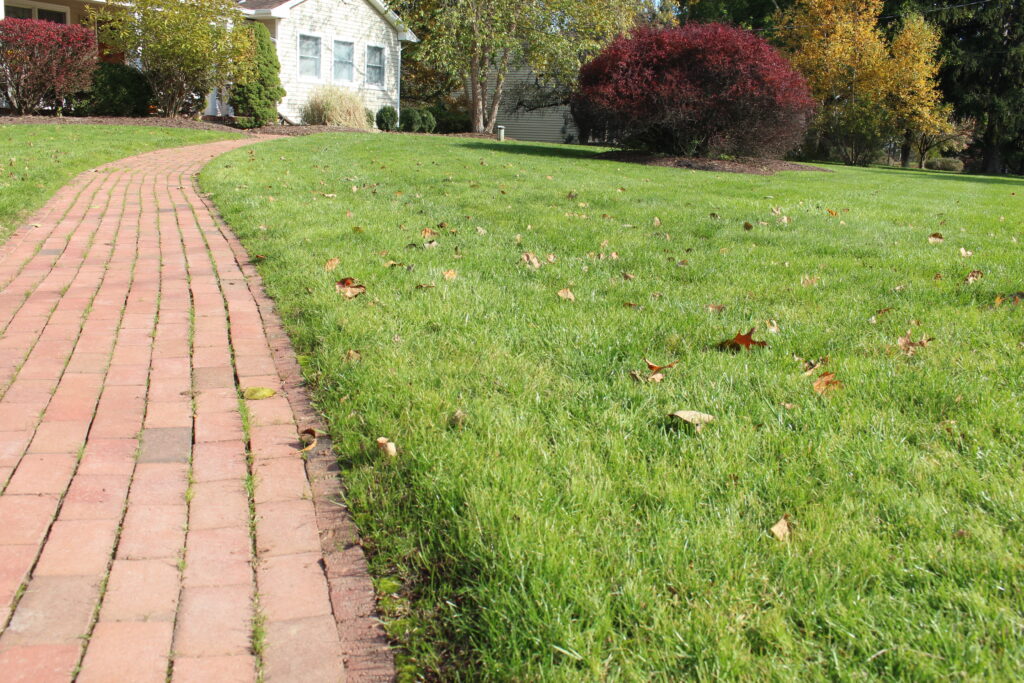
The work you put in over the next few weeks shows up as a denser, greener, more resilient lawn next spring. One that crowds out weeds on its own, handles drought better, and needs less intervention overall. Fall seeding is the single most effective thing you can do to build a thick lawn for the long run.
If you’re ready to get started with lawn seeding services, or you have questions about the right approach for your particular lawn, the team at Fairway Green, Inc. is here to help. Contact us today and let’s get your lawn the foundation it needs — while the window is still open.
Your Fall Lawn Seeding Questions, Answered
Q: Can I still seed my lawn in late October or November?
A: The ideal window for cool-season grasses is late August through the end of September, but seeding later isn’t impossible — it just changes what you’re doing. Very late seeding is known as dormant seeding. Once soil temperatures drop below roughly 50°F, the seed won’t germinate until the soil warms again in spring. That can work, but it’s far less reliable than seeding in the optimal window: the seed sits exposed to winter weather, is vulnerable to washout, and you have fewer options for how you handle spring weed control.
Q: Do I need to fertilize my lawn when I seed it?
A: Yes. New seed should get a starter fertilizer high in phosphorus, which is what young plants use to build roots. Standard maintenance fertilizer isn’t formulated for this, and some contain weed control that will stop your seed from germinating. If you’re on one of our programs, let us know you’re seeding so we can adjust the application for those areas.
Q: How long does it take for new grass seed to germinate?
A: It depends on the species and conditions. Perennial ryegrass is fastest, often showing in five to ten days. Turf-type tall fescue typically takes seven to fourteen days, and Kentucky bluegrass is the slowest at fourteen to twenty-one days or more. Many blends contain a mix, so expect germination to come in waves rather than all at once — don’t assume a seeding failed because you don’t see uniform growth in week one.
Q: Do I need to aerate before seeding, or can I just spread seed?
A: You can spread seed without aerating, but your results will be noticeably worse. Seed that lands on top of thatch or compacted soil often never makes contact with the ground and simply doesn’t germinate. Core aeration dramatically improves seed-to-soil contact and relieves compaction at the same time, which is why we pair the two services.
Q: When can I mow after seeding?
A: You can resume normal mowing after seeding, but make sure you are using a sharp blade. Dull blades tear young grass out of loose soil rather than cutting it.
Q: How much seed do I need?
A: Rates vary by species. Rutgers recommends roughly 2 pounds per 1,000 square feet for Kentucky bluegrass and 4 to 6 pounds per 1,000 square feet for tall fescue, fine fescues, and perennial ryegrass. Overseeding an existing lawn generally takes less than establishing a new one. More is not better — seeding too heavily creates crowded seedlings that compete with each other and thin out.
Q: Will seeding fix my weed problem?
A: Indirectly, and it’s the best long-term answer. Weeds move into thin turf. A dense, healthy lawn crowds them out on its own and needs far less weed control over time. But seeding won’t remove weeds already present, and you can’t treat those weeds while the new seed is establishing — which is why we plan the sequence with you in advance.