
Last Updated on September 9, 2025
Ground Ivy, also known as Creeping Charlie, is one of the more persistent weeds found in lawns and landscape beds. Its rounded leaves and purple flowers can quickly overtake a previously lush, green lawn. At Fairway Green, we’ve learned that while ground ivy control can be challenging, it is definitely achievable. With our approach and a bit of patience, we can significantly reduce, or even get rid of, ground ivy and reclaim your lawn.
So, What is Ground Ivy?
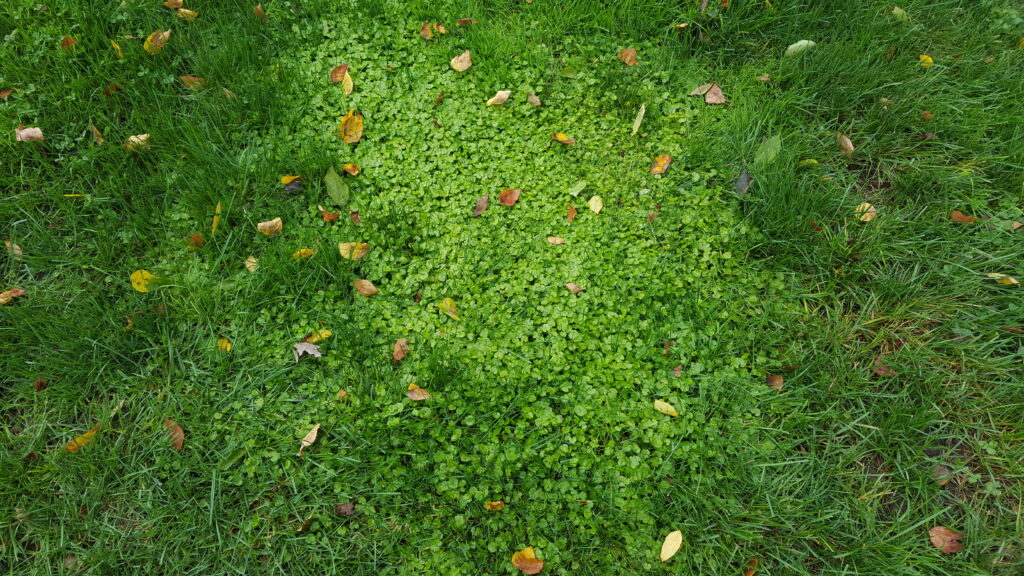
Ground Ivy, or Creeping Charlie, is a creeping, low-growing perennial weed. It also happens to be a member of the mint family. It is resilient and fast spreading, and we have seen it quickly take over areas of poor turf density.
What Does Ground Ivy Look Like?
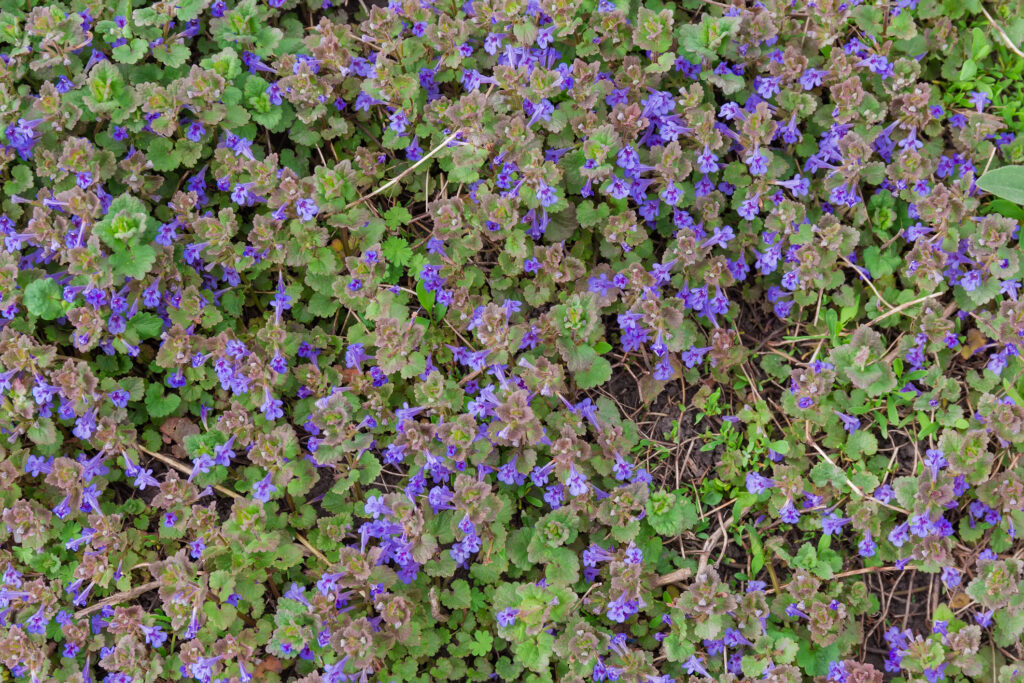
We often see the ground ivy weed mistaken for others like Wild Violet, but ground ivy has distinctive leaves and flowers that set it apart.
- Leaves: Heart shaped with scalloped edges, growing on a square-shaped stem.
- Color: Shiny green foliage that gives off a smell like mint.
- Flowers: Lavendar-blue tubular flower which blooms in the spring.
- Creeping Growth: Spreads horizontally with stolons and rooting nodes. This allows it to colonize large areas very rapidly.
What Makes Ground Ivy so Stubborn?
Ground ivy is such a formidable opponent due to the way it grows with an extensive root system, and the area of turf it thrives in. Here at Fairway Green, we see that this weed can originate from many sources: landscape beds, bordering woods and neighboring properties. While it can tolerate full sun, ground ivy thrives in shaded, moist areas where turf struggles. It is very resilient, able to regrow from small fragments of roots left behind. It is also a prolific seed producer. For all these reasons ground ivy has a competitive advantage over the ideal turf types we prefer in our lawns.
A Multifaceted Approach is The Ideal Plan of Action
A dense, overall healthy lawn is your best defense against all weeds, especially ground ivy.
We recommend a combination of both cultural and chemical control methods.
Cultural Ground Ivy Control
Cultural controls, such as proper watering and root density management, are the foundation of long-term ground ivy weed management. By improving the overall health of your lawn, you create an environment where desirable grass can outcompete weeds.
- Deep and Infrequent Watering
Proper watering techniques promote deep and healthy turf roots. When you water your lawn deeply but less often, you encourage the grass roots to grow, making them more resilient and better able to compete for nutrients. This also helps the soil surface dry out between waterings, creating a less favorable environment for the shallow-rooted ground ivy.
- Routine Fertilization
Our gold and platinum lawn care programs provide your lawn with the appropriate rates of fertilization to strengthen your turf. A healthy, dense turf can compete more effectively against weeds, including ground ivy.
- Improve Drainage and Decrease Shade
Regularly wet, shaded areas of the lawn are a haven for ground ivy. Improving drainage by adjusting the landscape can boost efforts to control ground ivy. Additionally, pruning tree branches to allow more sunlight to reach the ground makes these areas less hospitable to ground ivy.
- Core Aeration and Over Seeding
Aerating your lawn reduces soil compaction and encourages healthy root growth. Overseeding thin areas with quality grass types gives ground ivy less space to spread. A thick, lush lawn acts as a natural barrier, crowding out existing weeds and making it difficult for new ones to establish. Learn more about the benefits of core aeration and overseeding in our blog post.
Chemical Ground Ivy Control
In lawn care, a chemical control method refers to the use of herbicides, which are a specific type of pesticide, to kill or inhibit the growth of unwanted plants. Herbicides are scientifically formulated to disrupt the weeds’ biological processes, such as photosynthesis, cell division, or hormone production, ultimately leading to their death.
- Chemical control of ground ivy requires repeated applications of a plant specific herbicide in spring and fall. Unfortunately, there are no pre-emergent chemical controls available for this weed, so a proactive and consistent approach is necessary once it appears.
- Multiple applications are necessary: Ground ivy has a waxy leaf, making it difficult for herbicides to stick and penetrate the plant. In addition, the extensive root system below the surface will continue to put out new growth until it is controlled, which also takes multiple applications. Use of a targeted herbicide for ground ivy during the growing seasons (spring and fall) is required for satisfactory results. At Fairway Green, we use targeted weed controls designed specifically for ground ivy, ensuring maximum effectiveness. We time these applications to coincide with the plant’s active growth.
Don’t Fight Ground Ivy Alone
Ground Ivy is one of the most stubborn broadleaf weeds we treat but with our expertise and your persistence, ground ivy control is absolutely possible. Consistent, proper lawn care practices combined with professional chemical control methods is a killer combination against ground ivy. If you’re dealing with a current infestation, don’t hesitate to contact our office. Our team is here to help you restore the health and beauty of your property.
Contact us today for a lawn or landscape evaluation.
Frequently Asked Questions
Q: What is the best time of year to treat ground ivy?
A: The most effective times to treat ground ivy with herbicides are in the spring and the fall. The plant is actively growing and storing energy during these seasons, which allows the herbicide to be more effectively absorbed and transported throughout the plant, including its extensive root system.
Q: Why is ground ivy so hard to get rid of?
A: Ground ivy is stubborn for several reasons: it has a waxy leaf that makes it difficult for herbicides to penetrate, it spreads rapidly with creeping stems (stolons), and it thrives in moist, shaded areas where turf grass often struggles. It can also regrow from very small fragments of roots left behind after removal.
Q: Can I get rid of ground ivy without using chemicals?
A: Yes, but not very likely, cultural control methods like core aeration, overseeding, improving drainage, and proper watering can significantly reduce ground ivy’s spread. These methods create a dense, healthy lawn that naturally crowds out the weed. However, for a major infestation, a combination of cultural and professional chemical controls is often the most effective approach.
Q: Will a pre-emergent herbicide stop ground ivy?
A: No, unfortunately, there are no pre-emergent chemical controls available for ground ivy. It must be treated with a post-emergent herbicide after it has already sprouted.
Q: How many chemical applications will my lawn need to control ground ivy?
A: Due to its waxy leaves and resilient nature, ground ivy typically requires multiple applications of a targeted herbicide. At Fairway Green, we use a program of repeated treatments in the spring and fall to achieve satisfactory results and long-term control.