Every November, we get some version of the same question from customers: “Is there anything I should be doing before winter, or am I done?” It’s a fair question. The mowers are slowing down, the leaves are mostly on the ground, and after a long season, most of us are ready to put the yard to bed.
But here’s what our technicians see every spring: the lawns that thrive in spring are almost always the ones that got a little attention in late fall. A lawn that goes into winter clean, fed, and cut at the right height greens up faster, fights off disease better, and gives weeds less room to move in.
The good news is that proper fall lawn care practices aren’t too time consuming. Here are our recommendations for caring for your lawn before winter across New Jersey and Bucks County, PA, before the ground freezes.
1. Keep Mowing Until the Grass Stops Growing
Cool-season grasses like tall fescue, Kentucky bluegrass, and perennial ryegrass keep growing well into November, even when the air feels cold. Keep mowing on a regular schedule until growth stops, which usually happens once nighttime temperatures stay near freezing.
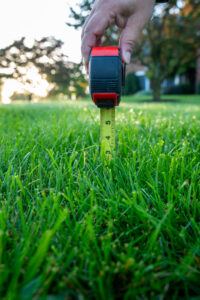
For the final cut, drop your mowing height to about 2.5 to 3 inches. Grass that’s left long and floppy can mat down under snow, which creates the perfect hiding spot for snow mold and gives voles cover to tunnel through your lawn. On the other hand, don’t go too short. Cutting too short stresses the plant right before it must survive the cold.
For a more detailed look at snow mold, check out our blog.
Nearly 40 years of experience in the industry has shown that this is often the most overlooked step for homeowners.
2. Get the Leaves Off the
Lawn
A layer of wet leaves left over winter blocks sunlight, traps moisture, and smothers the grass underneath. By spring you’ll often find thin, yellow, or dead patches exactly where the leaf piles sat.
You don’t have to bag every leaf. We strongly suggest mulching your leaves throughout the fall. “Mulching leaves” is basically mowing over them to cut them up into small pieces which are left over the lawn. The small pieces break down and return nutrients to the soil. If the leaves are thick enough that you can’t see the grass after a pass with the mower, rake or bag them instead.
Does your lawn struggle with mystery matted down, dead spots along the curb? It’s very possible that’s where your fall leaf pile was.
3. Feed the Lawn Before Winter Sets In
Late fall is one of the most valuable times to fertilize. The grass blades have slowed down, but the roots are still active, storing energy that fuels a quicker, healthier green-up in spring. A late-season feeding is often called a “winterizer” application.
Timing matters, especially in New Jersey. New Jersey’s fertilizer law restricts fertilizer applications late in the season, with a cutoff in mid-November for homeowners and December 1st for licensed professionals.
Fairway Green customers on a full program already have this step built in, timed to the rules and the weather.
If you’re interested in a more detailed explanation of the benefits of fall lawn fertilizer, check out our blog: Fall Lawn Fertilizing
4. Know Whether It’s Too Late to Seed
Every October and November, we field several phone calls a day from homeowners asking whether we can seed their lawn. Sadly, there’s still a big disconnect between when people think is the best time to seed and when it actually is in our area.
In New Jersey and Pennsylvania, where most lawns are made up of cool-season grasses, mid-August through September is the sweet spot for seeding. The soil is still warm enough for seed to sprout and establish strong roots before the cold arrives. By mid-November, new seed simply won’t have time to germinate and grow roots before winter.
It’s not that we don’t want to seed for you, or that we don’t want you seeding your own lawn. The reality is that high-quality grass seed is expensive, and germination rates drop off quickly once soil temperatures fall below about 50°F. In our area, that usually happens once nighttime temperatures are regularly dipping into the 30s and 40s. Seeding now often means paying for seed that never comes up.
If you have thin or bare spots, you have two options:
Seed in spring. It can be done, but it’s not ideal. Spring seedlings have only a few months to develop roots before summer heat and drought set in, and spring seeding doesn’t mix with crabgrass pre-emergent, which stops grass seed from germinating too.
Wait until late summer. Mid-August through September of next year is still the best time to seed and gives you the best return on your investment.
Some of the worst winter lawn damage we see in the spring comes from snow removal, not the cold itself.
Go easy on rock salt. Sodium chloride burns grass along driveways and sidewalks. Use calcium chloride or magnesium chloride products instead, and shovel before you salt so you need less of it.
Mark your edges. Put reflective stakes along driveways and walkways so plows and snowblowers don’t tear up the turf.
Watch where the snow goes. Piles of plowed snow mixed with salt and sand can kill grass where they sit. Try to spread them out rather than dumping everything in one spot.
6. Stay Off Frozen or Frosty Grass
When grass is frozen, the blades are brittle and break easily under foot traffic. Walking or driving on a frosty lawn can leave brown footprints and tire tracks that last into spring. Keep paths to the shed or the garbage cans on hardscaped walkways when you can.
7. Winterize Your Equipment and Irrigation
Irrigation systems: Have your sprinkler system blown out before the first hard freeze. Water left in the lines can freeze, expand, and crack pipes and heads.
Hoses and spigots: Disconnect hoses, drain them, and shut off outdoor water to prevent burst pipes.
Mower: Add fuel stabilizer or run the tank dry, clean the deck, and get the blade sharpened now so you’re ready for the first spring mow.
8. Clear Toys, Furniture, and Debris
Kids’ toys, patio furniture, firewood, and tarps left on the lawn all winter will smother the grass underneath. Same goes for fallen branches. Take a quick lap around the yard and clear anything that’s sitting on the turf.
Your Quick Winter Lawn Checklist
Final mow at 2.5 to 3 inches
Mulch or remove fallen leaves
Apply a late-fall fertilizer within the allowed window
Use lawn-safe ice melt and mark driveway edges
Minimize traffic on frozen grass
Blow out irrigation, drain hoses, and service the mower
Clear toys, furniture, and debris
Let Fairway Green Handle It
A little effort now pays off with a thicker, greener lawn next spring. If you’d rather leave it to the pros, Fairway Green’s lawn care programs cover fertilization, weed control, aeration, and seeding on the right schedule for New Jersey and Bucks County lawns, so nothing gets missed and nothing goes down at the wrong time.
Ready to get a head start on next season? Contact Fairway Green today for a free lawn evaluation and quote.
From all of us at Fairway Green, thanks for another great season. Enjoy the break from mowing, and we’ll see you in the spring.
Winter Lawn Care: Your Questions Answered
Q: When should I do my last mow of the season?
A: In New Jersey and Bucks County, the last mow usually falls somewhere in mid-to-late November, but go by the grass, not the calendar. Once it stops growing between mowings, you’re done. Make that final cut at 2.5 to 3 inches.
Q: Is it too late to fertilize my lawn in November?
A: It depends on the date and the conditions. New Jersey limits fertilizer applications late in the season, and fertilizer should never go down on frozen ground. If you’re past the window, skip it and plan for an early-spring feeding instead. If you’re a Fairway Green customer, we handle the timing for you.
Q: Can I just leave the leaves on my lawn over winter?
A: A light layer you’ve mulched with the mower is fine and even helpful. A thick layer of whole leaves is not. It blocks light, traps moisture, and can leave dead patches by spring.
Q: What is snow mold, and how do I prevent it?
A: Snow mold is a fungal disease that shows up in early spring as matted, straw-colored or pinkish-gray circles, usually where snow sat the longest. The best prevention is a shorter final mow, clearing leaves, and spreading out big snow piles so they melt faster. Most lawns recover with a light raking once things dry out.
Q: Will rock salt kill my grass?
A: It can. Regular rock salt (sodium chloride) is hard on turf and soil. Use a calcium chloride or magnesium chloride ice melt near lawn edges, and shovel first so you need less of it. If salt damage does show up in spring, a good soaking and some overseeding usually fixes it.
Q: Is it too late to seed my lawn?
A: Yes. By mid-November the soil is too cold for new grass to establish before winter.
Q: Do I need to water my lawn before winter?
A: Usually not in our area. Fall rain is typically enough, and you’ll want your irrigation system blown out before the first hard freeze anyway. If we have an unusually dry fall, a deep watering before the ground freezes can help.

 Grass Stops Growing


 Winter Sets In